Every memorable event — a wedding, a milestone birthday, a corporate celebration — runs on a budget, whether you write one down or not. The couples and hosts who stay calm through planning are almost always the ones who mapped their money first. This guide walks you through building an event budget that actually holds up, and shows you how to do it in minutes with our free Budget Planner.
1. Start with your total number
Before you split anything, decide the one figure that matters most: the total you're comfortable spending. Be honest and specific. A vague "around $20,000" quietly becomes $27,000 by the time the final invoices land. Pick a real number, and if several people are contributing, add up each contribution so the total is grounded in what's actually available.
2. Break the total into categories
A budget you can steer is a budget split into categories. Rather than tracking one giant number, you track a handful of line items — venue, catering, photography, and so on. As a starting point, here's how event spending typically breaks down. Treat these as guidelines, not rules: shift the percentages to match your priorities.
| Category | Typical share |
|---|---|
| Venue & rentals | 30–40% |
| Catering & bar | 20–30% |
| Photography & video | 10–12% |
| Attire & beauty | 8–10% |
| Flowers & decor | 8–10% |
| Music & entertainment | 8–10% |
| Stationery & invitations | 2–3% |
| Favors & extras | 2–3% |
3. Track two numbers per line: allocated vs. actual
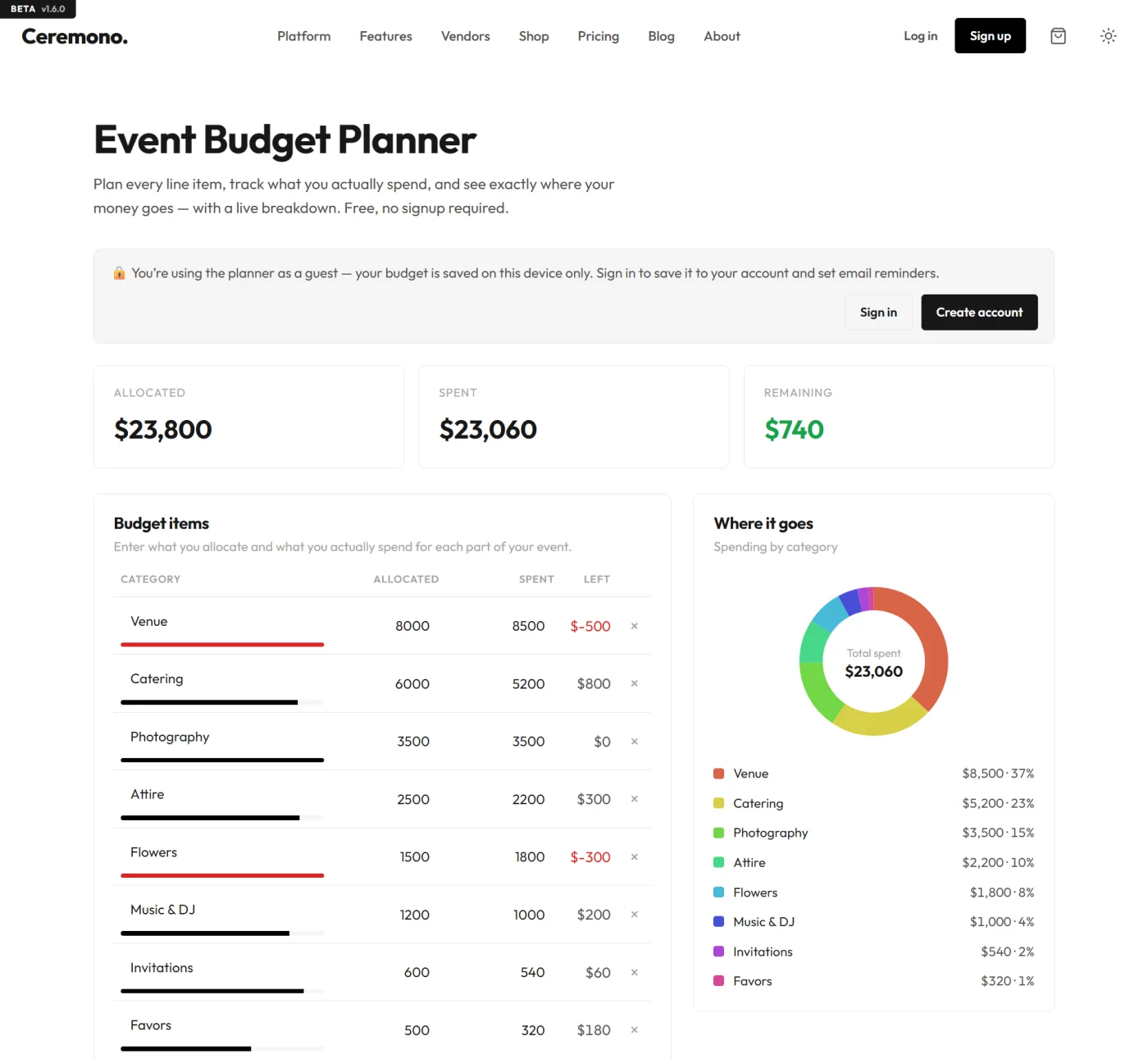
This is the habit that separates a budget that works from a spreadsheet you abandon. For every category, track two figures:
- Allocated — what you planned to spend.
- Actual — what you've actually committed or paid.
The gap between them is your early-warning system. When "actual" creeps past "allocated," you see it immediately and can rebalance — trim the flowers to cover the catering — long before it becomes a nasty surprise at the end.
4. Build in a buffer
Set aside 10–15% of your total as a contingency line before you allocate the rest. Overtime bar service, a last-minute rental, extra postage — something always comes up. A buffer turns "we blew the budget" into "we used part of the buffer, as planned."
Tip: Prioritize before you allocate. Pick the two or three things that matter most to you — say, the photographer and the food — fund those first, then divide what's left across everything else.
5. Update it as you go
A budget is a living document, not a one-time exercise. Each time you book a vendor or pay a deposit, update the "actual" figure. Five minutes after every decision keeps the whole picture accurate — and keeps you in control right up to the day.
Plan your event budget now — free
You don't need a spreadsheet or an account to start. Our free Event Budget Planner lets you add categories, enter allocated and actual amounts, and instantly see a live chart of where your money goes. Create a free Ceremono account and you can save your budget, attach it to an event, and set email reminders for deposit dates and final payments — so no deadline slips.


